

Precious metals are known for their value, but platinum metal stands above the crowd due to its rarity and significance. Consider the tiers of credit cards, records sold by a musical artist, or trophies earned in a video game: the usual line-up, from lowest to best, includes bronze, silver, gold, and platinum. What is it that makes this precious metal so valuable, and what purposes does it serve people beyond its rarity?
- Platinum was first referenced in 1557 by Julius Caesar Scaliger upon coming in contact with it near modern-day Mexico, saying it was a metal which “no fire nor any Spanish artifice has yet been able to liquefy.”
- Physically bearing a resemblance to silver, the name for platinum comes from the Spanish word, platina, which literally means “Little Silver.”
- Platinum metal has a significantly high melting point of 3,215 °F (1,769 °C) and a boiling point of 6,917 °F (3,825 °C), making it of extreme interest for both scientists and engineers. Comparatively, the melting point of gold and silver are 1,700 °F (926 °C) and 1,615 °F ( 79 °C).
- Platinum also has one of the highest room-temperature densities of a natural metal, sitting around 21.45 g·cm-3. In comparison, the density for gold is 19.32 g/cm-3, while silver is 10.49 g/cm-3.
- Platinum will not naturally oxidize in the air, but it may corrode when coming into contact with cyanides, halogens, and sulfur.
- Because platinum metal can be found naturally occurring in the environment, there are examples of platinum being known by indigenous peoples of both South and Central America. However, due to its sturdy and resistant physical features, the metal could not be produced until the 1900s.
- Natural deposits of platinum ore are difficult to come by, with 90% of the world’s platinum being mined from just four separate mines, three of which exist in South Africa, while more have been found naturally in Russia’s Ural Mountains.
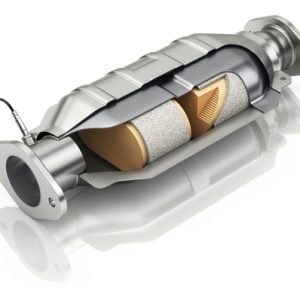
- Nearly 50% of all platinum metal unearthed from mines and purified each year is used for industrial application purposes, particularly for the production of catalytic converters—the component in your vehicle which helps filter/control harmful chemical emissions into the atmosphere.
- Annual productions of platinum are estimated to be only a little over 100 tons. While this is still quite hefty, it does not compare to the production of other metals. One such metal to consider is steel, a metallic compound of which the U.S. manufactures and produces over 250 tons every day.
- Both our moon and meteorites we’ve recovered contain more platinum than Earth.
- While platinum can be found naturally in mines, it can be physically produced when nickel is refined from both copper and nickel ores.
- While platinum can become scratched, it does not scratch the same as gold—it doesn’t lose physical attributes due to tarnishing. For both this and its resistance to corrosion, platinum metals are especially sought-after by jewelry makers.
- High-end jewelry—particularly watches from companies like Rolex and Vacheron Constantin—and diamonds tend to use platinum when producing limited-edition runs of their products, thus increasing the MSRP and long-term value of the piece.


The next time you reach for an everyday item that exists in your life, consider if it might have platinum inside of it, whether as a physical feature or an electronic component. Furthermore, if you’re someone who has questioned whether platinum would make a useful investment, consider taking a closer look at what is available. If you have any questions about our products or the platinum metal market, don’t hesitate to reach out to our team!

