
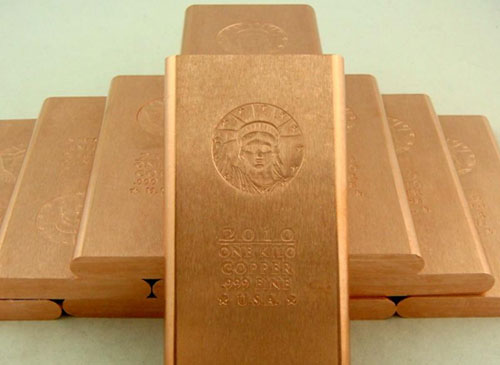
Copper is a base metal used in many industrial applications. In addition to its industrial uses, it’s also becoming a more popular investment vehicle for many small-time investors.
Copper bullion is available in both bars and coins for very attractive prices. If you can’t afford gold or silver, copper bars and coins may be the next logical option for you.
With that said, we’ve been witnessing much activity in the copper markets over the last five months. In fact, copper closed at an all-time high of $4.41 per pound in London trading on December 31st, soaring nearly 52% since June when it was selling for around $2.86 per pound.
In the last two years (since Jan. ’09), copper has jumped from around $1.53 per pound to its current levels above $4.

Renewed interest on the part of hedge funds as well as an increase in Exchange Traded Funds (ETFs) focused on commodities is seen as playing a role in the recent copper rally. Analysts though say global industrial demand is still the main driver.
Analyst Mickey Fulp says the record copper prices are being driven by speculators, hedge funds and stockpiling by the Chinese.
These record prices are causing some pause for many analysts though, including Fulp, who say a short-term correction is due. Supply and demand fundamentals simply do not support the current price they say.
Increasing Warehouse stockpiles after months of declines as well as rising interest rates in China over inflation are contributing to the idea that industrial demand for copper may wane some for awhile.
Therefore, in the first few days of the year, copper has seen its largest price drop in many weeks due to many of these concerns expressed by Fulp and other analysts.
Despite the apparent consensus of a short-term correction, the long-term outlook for copper and other commodities is strong. Two large financial institutions – Blackrock Capital and JPMorgan – plan to offer copper ETFs in the upcoming year. Add this to the fact that there are currently no other suitable alternatives to copper as well as its limited supply and you’ve got a recipe for volatility says Fulp.

