
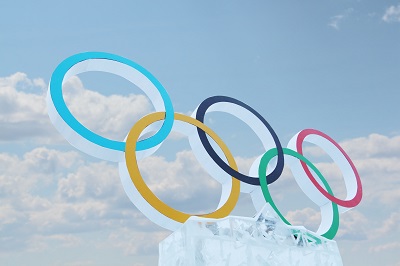
The 2014 Winter Olympics are in full swing, and the United States pulled off a strong start in medal count standings — along with the Netherlands, Norway, and our Canadian friends to the north.
As of Monday, February 10, five Americans have taken medals (2 gold and 3 bronze), and there are still several anticipated events.
The world is definitely watching, and hopefully there will be plenty more highly-coveted gold, silver and bronze medals for Team Red, White and Blue.
Olympic Gold: A Brief History
Although prized by the Ancient Greeks — much like it is today — gold hasn’t always been a symbol of victory for the world’s oldest sporting event.
At the dawn of the Olympic Games in 776 BC, winners were crowned with an olive wreath from a sacred tree near the temple of Zeus at Olympia.
It wasn’t until the Modern Olympics, during the summer of 1904, that the tradition of awarding gold, silver and bronze medals to the world’s best athletes was first introduced.
These three metals represent the first Ages of Man in Greek mythology:
-
The Golden Age, when men lived among the gods
-
The Silver Age, when humankind remained young for a hundred years
-
The Bronze Age, the era of heroes
2014 Sochi Winter Olympic Games
This year’s medals are the second largest in Olympic history — rather fitting for the host-nation of Russia, the most massive nation on earth.
Based on current market prices, NBC’s Today show estimates that each 2014 Sochi gold medal is worth around $583 based on metal content alone.
Here are some other fun facts about this year’s Olympic medals:
-
The gold medals are not made of pure gold — they haven’t been since 1912. Rather they contain 525 grams of silver with a 960 hallmark, and 6 grams of gold with a 999 hallmark (a purity standard for precious metals).
-
Pieces of the Chelyabinsk meteorite — the spectacular meteor that fell from the sky last February and received substantial media attention — are embedded in some of the medals.
-
A record number of 2014 medals have been made: 1300, in response to 12 new events, including ski and snowboard slopestyle, luge team relay, and ski halfpipe.
-
The medals feature a glass/metal combo to reflect the landscape of Sochi, from its snowy peaks to sandy beaches. The patchwork design symbolizes the many diverse cultures and ethnicities of Russia.
With plenty of excitement to come in the next two weeks, no doubt the country will be glued to the most expensive Olympic Games in history.
Cheer on your favorite athletes, like snowboarding legend Shaun White and teenage sensation/alpine skier, Mikaela Shiffrin.
And check out the epic America vs. Russia hockey showdown on Saturday.
Go Team USA!
What Olympic events are you most excited for?
Please leave a comment below or connect with us via Facebook and Twitter today.

