
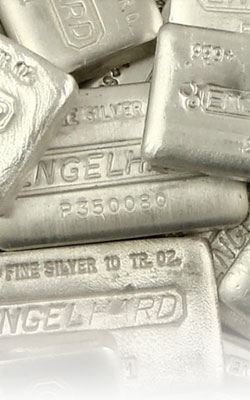
Some investors prefer silver bullion to gold for several key reasons. Lower cost, ratio-to-gold prices, and a high industrial demand are the most common.
Yet like gold, silver has struggled in the first quarter of 2013, sliding more than seven percent since the first of the year.
Many would argue silver is in a bear market since its $49.50 peak in April 2011. And by the standard measure, it is. In fact, since its peak to nearly $50 more than two years ago, silver has declined an astounding 42 percent.
Does this mean silver is currently in a long-term bear market — or decline — following several years of consistent gains?
According to a technical summary in SilverSeek, the answer is a resounding NO.
Long-Term, Seven-Year Historical Trends Suggest Silver is at (or Near) a Bottom
Let’s look at it visually – chart coming soon!!
When you examine silver over the last several years, one of the first things you probably notice are its highs and lows.
Using sophisticated computing models, analysts like Clive Maund can discern certain trend lines, and can also establish trading ranges. These ranges help investors determine the right buying-and-selling price points to meet their individual goals.
Over this seven year period, it’s easy to see silver’s highs in 2006, 2008 and 2011.
Likewise, there are low points in 2007, late 2008 into 2009, and again in late 2011 into 2012. From these high and low points, there is what’s called a trendline.
With Silver Dawdling in the High Twenties, This Seven-Year Chart Suggests the Price is Beginning to Match the Lower Trendline — Portending Great Buying Opportunities
In repeated rallies and dips, silver has dropped into this high twenties range before seeing a strong rally back above $30.
After touching $48 two years ago, silver dropped back to about $27.50 in a matter of months, before rallying back to $35.
At the time this is written, silver is at $27.50 — which means it’s right at the support level of $26.50 to $27.50.
This eight-month chart also provides a glimpse into these patterns, suggesting a short-term dip to as low as $26.50 before breaking up.
Part of this has to do with commercial “short” and “long” positions.
Short positions are (basically) bets that a commodity will be lower. If that ends up to be the case, the investor makes a handsome return.
Silver has seen a record number of short positions in recent years, but with the latest dip in silver prices, many have cashed these short positions. According to Clive’s eight-month chart (available soon), as soon as silver drops a little further, all of the short positions will be sold off.
Read more about the high number of “short” positions in the silver market here.
Silver Prices in the $26.50 to $27.50 Range Represent a Tremendous Purchasing Opportunity, According to Historical Charts
Once a price reaches a certain low point, more buyers are attracted to a commodity — silver included.
Likewise, when it reaches a certain high point, investors sell and take profits. When the commercial short positions have taken their profit, buyers will be drawn back into the silver market.
Recent polls show the public’s attitude toward silver investment going down, possibly due to recent record-highs on the Dow Jones, S&P and other equity markets.
However, if you look closely at trend lines developed from the past seven years, it is theoretically possible silver could end up touching $70 in the long-term.
Aside from these helpful charts, other factors, like record investment demand, growing industrial demand and economic stimulus, lead us to believe silver could go even higher over the long-term.
Yet as these charts show, silver sometimes seems volatile. However, if you stretch your view over several years, definitive patterns begin to emerge.
There’s No Better Time Than the Present
If you’ve been looking for the right time to invest in silver bullion, now may be that time.
If, indeed, silver hits the lowest ends of its support level, we could see a strong rally develop in the latter half of 2013.
Next time silver rallies, it’s difficult to determine how far it will go in the short-term.
Yet in our opinion, looking at the long-term often pays off — big time — down the road.
What Are Your Thoughts?
Where’s the future of silver headed? Way up, way down, or somewhere in between?
Are you a short or long-term silver investor?
Please leave a comment below, or visit our Facebook and Twitter pages today.

