
For over 225 years straight, the U.S. Mint has been producing coins for circulation within the nation. While there have been many coins produced over the course of the U.S. Mint’s history, some U.S. Mint coins, unfortunately, have met their end. However, there is a fascinating history that is embedded into the production of the American coinage industry and the vast number of coins produced, from the original man-powered machinery, which sometimes relied on horses, too, to the current age of computer-animated laser-engraving machines.
How has the U.S. Mint evolved since its beginning and how have the methods for pressing coinage changed? Let’s explore the means through which the U.S. Mint developed since its conception.
The Beginning of the US Mint

To look into the origins of the U.S. Mint, it is important that we start with the colonial period prior to its creation. In 1777, the Congressional committee of the United States recommended that the newfound country establish a national mint, one that allowed for a standard American currency to be produced. While the treasury board began looking into the subject material surrounding the mint at that time, there was nothing established. As recorded, this was the first mention of a national mint being created for the U.S.

While debates would take place over the next decade concerning the creation of a national bank, little more was said about the creation of a mint, besides Superintendent of Finance Robert Morris’s reports to Congress for the inception of such a thing. It was in October of 1786 when the Continental Congress officially authorized the formation of a national mint to mint coins of gold, silver, and copper; however, arguments then arose, as were expected to occur, between congressional members over whether the minting process should be a contractual or public business.
Under the Articles of Confederation, the U.S. allowed states to authorize and mint their own coins. While this was appreciated by the states, making for increased state rights, it made trade difficult across the country. These difficulties are what led people in Congress to continue discussing the possibility of a national standard. While more red tape seemed to appear, it was the official signing of the Constitution on September 17, 1787 that began moving the process along. With the passage of the Constitution, Congress was now allotted the powers to coin money and regulate its value and authenticity. Nearly a year later, the Treasury Department of the United States was established, making the U.S. Mint seem ever closer.
Finally, in 1792, the finalized creation of the U.S. Mint came to fruition. On April 2nd, Congress passed the Coinage Act, which called for the creation of a national mint, along with the authorization and regulation of U.S. Mint coins, including: gold coins—Eagles ($10), Half Eagles ($5), and Quarter Eagles ($2.50); silver coins—Dollars, Half Dollars, Quarter Dollars, Dimes, and Half Dimes; and copper coins—Cents and Half Cents. Each coin had its own regulated denomination.
This authorized mint with a mint mark of “P” was to be located in Philadelphia, which was then the nation’s capital. Directed by David Rittenhouse, who was appointed by George Washington, the mint effectively introduced their first-minted coins in 1793, with the production of 11,178 copper cents. However, because the mint lacked experience designing and casting coins, and they relied on machinery powered by both men and horses, the production of U.S. Mint coins was a slow process.
Expansion into the South

While the primary U.S. Mint was located in the nation’s original capital of Philadelphia, Pennsylvania, the United States saw fit to begin expanding. This decision was caused by two gold rushes that occurred in the early 1800s, which took place in both North Carolina and Georgia. So much gold was found at that time and then sold and sent to the U.S. Mint in Philadelphia that laborers were overtasked. The demand required of the public was exceeding faster than expected.
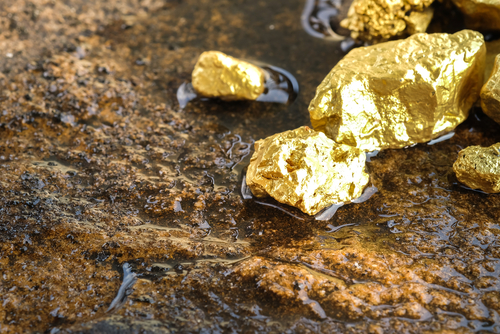
Thus, in 1835, Congress called for the creation of three new mints within the southern states of the U.S., located in Charlotte, NC (“C”), Dahlonega, GA (“D”), and New Orleans, LA (“O”). While the mints in NC and GA solely processed the gold found by miners within those states, the New Orleans Mint was established to continue to strike U.S. Mint coins of both gold and silver.
Through the approval of the Secretary of the Treasury, these mints were to be placed under the control and regulation of whomever was the appointed Director of the Mint. It was at this time that the Congressional committee gave the Treasury Department supervision over the national mints.
The Charlotte, Dahlonega, and New Orleans branch mints would continue under U.S. Treasury Department supervision until the Civil War began nearly three decades later. At the beginning of the war, the Confederate forces would storm these mints and seize control of them. For the rest of the war, the Charlotte Mint would be utilized by the Confederates as their headquarters.
Steam Powered Minting

While the Philadelphia Mint had to originally rely on man- and horse-powered machinery to cast, engrave, and produce the U.S. Mint coins, the evolution of technology would bring about notable changes for the way in which coins were produced across the nation. Beginning in 1816, the presses used for rolling and cutting coins were upgraded, with the introduction of steam engines.
In 1833, the U.S. Treasury building was burned down for the second time, this time by arsonists rather than the British. While the Treasury Department was attempting to create a fireproof rebuild, the U.S. Mint was attempting to increase its technological prowess, researching the methods put in place by other coin engravers around the world.
To increase their capabilities, the mint hired Franklin Peale in 1833 to travel to the official mint branches of Europe to determine the means through which they processed their coins. After two years of traveling and research, Peale returned to the Philadelphia Mint with extensive notes on how to improve the process, creating the first steam-powered coin press to be used in the U.S.

In March of 1836, this first steam press would be put into place, increasing the overall production at which U.S. Mint coins could be produced for the nation. The process, which was far less intensive than those used in the man- and horse-powered days of decades past, required just one person. Blank coins were placed inside of a tube and fed into the dies where they would be cast and pressed.
The US Mint Heads Westward

While the mint produced larger quantities of coins for the country, the nation underwent further changes of its own. While the Philadelphia Mint improved its technological processes with steam-powered machinery and the U.S. headed to an eventual civil war, U.S. citizens were headed westward due to war with Mexico and the siege of Native American properties, all fueled by the quest of America’s “Manifest Destiny.”
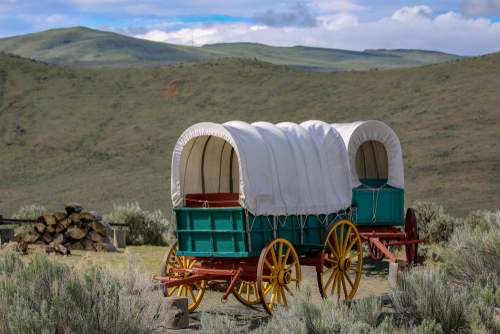
While people moving westward were finding riches in the new land, they were soon startled by another unearthed find. In 1849, the California gold rush began, following the exposure of vast gold mines across the San Francisco area. Similar to the issues faced by the Philadelphia Mint when gold and silver deposits were discovered in the southern U.S. states, the original national mint branch was becoming overwhelmed by the amount of gold being sent from the west. Furthermore, the amount of time required to send the gold east was overwhelming, and miners were worried that their gold might be stolen during its transportation to the Philadelphia Mint.
To ease this issue, the U.S. Treasury established a branch mint in San Francisco in 1854, making it easier for miners to convert their mined gold into gold coins. By the end of 1854, the San Francisco Mint (S) estimated that they produced more than four million dollars-worth of gold coins. The gold rush soon spread elsewhere, as gold was discovered in Denver, Colorado mines in 1858. Similarly, around the same exact time, a large silver mine, one of the first major finds in the U.S., was discovered in Nevada. Referred to as the Comstock Lode, which was found right near Carson City, people began flocking to the “Silver State” to make riches off of the abundance of silver. To appease miners, and to allow for the nation to strike even more coins, the U.S. Treasury approved new U.S. Mint branches in both Denver (“D”) and Carson City (“CC”).
The Carson City mint was opened to both accept deposits from miners and mint coins from the raw bullion, while the Denver mint was opened as a private mint. It was treated as an assay office, where miners could bring in gold to be melted, assayed, and cast into gold bullion bars. The Carson City mint was halted when the Comstock Lode ore began declining in the late 19th century, and the Denver mint was converted back into a mint branch in the early 1900s.
The Introduction of Electricity

In the first few months of the 20th century, the United States established the Gold Standard Act, a proposition that fixed the value of the U.S. dollar on the value of gold. This was the end of bimetallism, a period in which the U.S. dollar was valued on both gold and silver. Around this time, the U.S. Mint was going through changes of its own. While new mint branches were established in the last century, the Philadelphia Mint was attempting to produce new methods to continue updating the process of creating coins.
In 1901, the Philadelphia Mint opened a new, third facility, wherein all steam-powered machinery was replaced with electricity-powered coin production equipment. This new methodology further increased the capabilities at which the mint could produce coins, increasing the number of coins produced per year. The building, which cost $2M at the time, was said to be well worth it, with one representative saying, “No pains have been spared … it will be … a model institution.” Electricity is still the standard to this day, following the same processes that it did over 200 years ago; however, rather than relying on traditional man- and horse-powered presses, mint branches use computers to control the machinery. It is said that one coin press can produce up to 720 coins per minute—a feat that would seem unbelievable to our predecessors.

US Mint Coins

Over the course of the U.S. Mint’s history, there have been significant changes. The way in which coins were once produced, from their casting to the materials utilized, have changed, and it’s worth noting what occurred. The fineness of gold coins has fluctuated depending on the resources available in the U.S. Originally, gold coins were created with a fineness of .9167, but that was reduced to .8992 in 1834. However, just a few years later, this value was increased to .9000. However, in 1933, the production of gold coins came to a halt and the ownership of gold coins and bullion was outlawed. While the latter part of this legislation was repealed in 1974, the U.S. Mint branches no longer used gold for coins meant for circulation.
Silver coins also saw changes in fineness over time, with silver coins originally consisting of .8924 and then changed to .9000 in 1837. By the late 1800s, silver started being phased out from U.S. Mint coins, being replaced by copper and nickel alloys. Copper coins, on the other hand, have continued in circulation, although the concentration of metals has changed with time. Similar to the other precious metals, the reduction of copper was brought about by increasing prices. Nowadays, the penny only consists of 2.5% copper, while the rest is made of zinc. While history has brought about changes for the U.S. Mint, it has continued as the staple for coin production in the U.S., holding on as a national icon for numismatic purposes.




Leave a Reply