As you’ve undoubtedly heard over the water cooler or on the news, lawmakers in Washington brokered a last-minute, last-ditch deal to avert the so called “fiscal cliff.” Generally speaking, the final deal delays $110 billion in automatic spending cuts until March, while increasing income tax rates on individuals earning over $400,000 annually, or families earning over $450,000.
If you earn wages, you’re undoubtedly aware of the 2% increase in payroll taxes being foisted upon all taxpayers.
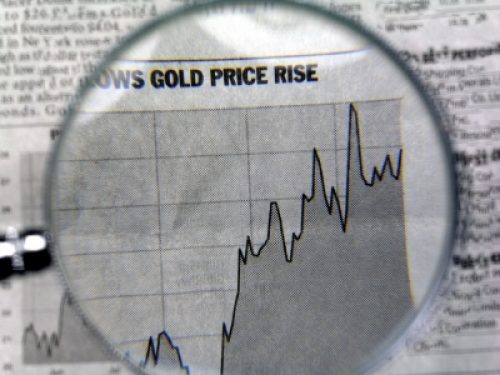
Following news of the deal, gold rallied nearly $40 per ounce in the first week of 2013 – since, it has fluctuated in the high $1600s range, and in fact topped $1690 this week on disappointing U.S. data and news of a boost in monetary stimulus by the Bank of Japan.
Many, including ourselves, predicted Washington would broker a last-minute deal to avert the fiscal cliff, at least temporarily.
The last-minute compromise though precedes a much larger deadline down the road – the debt ceiling.
That’s right…the U.S. Government will once again reach its self-imposed borrowing limit in the next couple of months. If the limit is breached and all alternatives are exhausted, one of two things could happen. Either the Congress and President will agree to raise the debt ceiling, or the government will default and have to dramatically reduce spending.
Just like the debt ceiling debacle in 2011, top credit-rating agencies like Moody’s are warning of the risk of another credit downgrade if a deal isn’t reached.
Uncertainty surrounding this unfolding story is one of main reasons Goldman Sachs is raising its 3-month target for gold bullion to $1825 per ounce.
Other analysts, notably Sonny Tahiliani of MacroMoves in New York, say gold will need to top $1700 “to gain any traction. Some momentum could materialize, given the U.S. debt ceiling wrangling.”
Other news lifting gold in early weeks of 2013 is disappointing numbers on manufacturing, a soft-dollar and news of “open-ended” asset purchases by Japan’s central bank. Data also shows a 1% drop in existing home sales in December.
Combine weak economic data with uncertainty surrounding the debt limit and you’ve got a recipe for a strong gold rally in the first-half of 2013. It’s important to reflect back on what happened during the last debt-ceiling increase in 2011.
As the deadline approached and lawmakers scrambled for a last-minute deal, gold surged – to record highs of over $1900 in fact.
Of course, it’s hard to determine how this will all unfold, and just what its effect on the gold markets will be. It appears we’ll find out sometime in May, as the Republican-led House passed a bill this Wednesday removing the debt limit until May 18th.
In all likelihood, the debt-ceiling debacle will draw out until mid-May. In the mean time, we could see gold climb steadily higher. If a deal is reached, gold could see a retreat in the second half of the year according to Goldman Sachs.
What do you think will happen to gold in the first half of 2013?
Will uncertainty surrounding the debt-ceiling debate and weak economic data push the price of gold bullion to new highs?
Will we see a retreat later in the year as analysts at Goldman Sachs claim?
We’ll see – but if you’re looking to buy gold bullion, it’s best to buy before a large rally. Not only will prices be higher, you may encounter more shortages. If you’re searching for a solid long-term investment, gold bullion coins and bars are still favored by many.




Leave a Reply