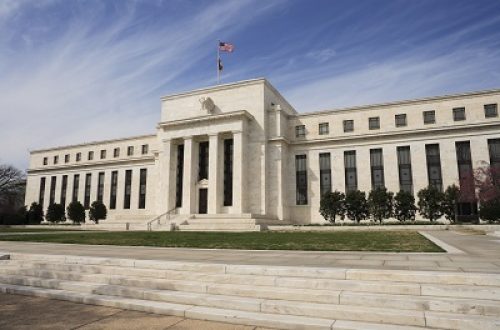
Monetary policy: a simple enough phrase that defines centuries of complex, archaic theories explaining how a government should control its wealth in order to benefit the economy. Most countries have their own individual monetary policies, and in turn, each policy affects the others.
Monetary Policy: A Definition
So in simplistic terms, what exactly is monetary policy? Essentially, it’s the process by which a government or its central bank (such as the Federal Reserve in the United States) controls the supply, availability and cost of money in order to impact the economy. By impacting the cost of money, the government is able to affect the amount of money that is spent, which consequently affects the economy.
How exactly does monetary policy affect the economy?
According to the Federal Reserve website, “monetary policy influences inflation and the economy-wide demand for goods and services.” In short, monetary policy has significant impact on supply and demand and other economic components, such as interest rates. When people feel monetarily secure, they spend money, and their consumer confidence provides a boost for the economy.
U.S. Monetary Policy
While there are several goals that U.S. monetary policy aims to achieve, the Federal Reserve directs its focus toward three main objectives: creating stable prices, moderating interest rates, and promoting maximum employment. While the first two, creating stable prices and moderating interest rates, are still at the forefront of the monetary policy discussion, the final goal of promoting maximum employment, has been more of a priority. Since the economic meltdown in 2008, the Federal Reserve has concentrated their policy toward reducing unemployment, fostering economic growth and creating a more stable financial market.
How is U.S. Monetary Policy implemented?
Now that the basics of monetary policy have been established, how is such policy implemented? The Federal Open Market Committee, or FOMC, is the main force behind formulating the nation’s monetary policy. On eight separate occasions during the course of the year, the FOMC has a series of meetings where they discuss what direction monetary policy should take based on the welfare of the economy. After lengthy deliberation, the FOMC proceeds to vote on a variety of potential policies that they believe would positively affect the state of the economy. After their vote has concluded, the chairmen of the FOMC releases a statement explaining the various verdicts that the committee has reached. According to federalreserveeducation.org, “Before conducting open market operations, the staff at the Federal Reserve Bank of New York collects and analyzes data and talks to banks and others to estimate the amount of bank reserves to be added or drained that day. They then confer with Fed officials in Washington who do their own daily analysis and reach a consensus about the size and terms of the operations.” After collecting such data, the FOMC moves forward with their suggested policies, primarily through the buying and selling of U.S. treasuries and securities.
How is the precious metals industry affected by monetary policy?
Based on a variety of programs implemented by the Federal Reserve within the last few years, gold prices have risen by 70 percent. Consequently, gold has become a highly sought-after commodity, with silver following a similar trend. Gold and silver have both shown signs of resilience against a weakening dollar and various global crises, as seen recently in Greece, Ireland, Italy, Portugal and Spain. Considered to be safe haven assets in times of economic turmoil, and useful in both inflationary and deflationary scenarios, investors have flocked to hedge their portfolios with metals since 2008. With economic uncertainty lingering in the future and debt catastrophes plaguing Europe, gold and silver can be counted on as trusted sources of monetary safety and security.
What’s your take on U.S. Monetary Policy? Feel free to comment below….and try to keep it family friendly.




Whooooooooooo Hoooooooooooooo!!!! Der’s gold in dem der buildings!!!! Whooooooooo Hoooooooooooo!!! I’m gones be rich!!!!!!