
If you have just started exploring the world of numismatics, it is likely that you have started to feel a bit overwhelmed. This not only comes from the amount of information there is surrounding numismatics, the history of some coins and the value of others, but the amount of terms and jargon that is often used within the field. For this reason, we knew it would be beneficial to provide you with an essential guide to numismatic terms definitions—what terms you’ll see most often in this field and what they mean for you.
Numismatics: What Does It Mean?
Although applicable to the broader study of money, the numismatic definition is often relative to the study and collection of coins. People who study numismatics, or are an avid numismatic coins collector, are known as numismatists.
Taken from the French numismatiques–a derivation of the Late Latin numismatis–which is a genitive variation of nomisma, the word numismatics appeared in English in 1829, coming from the adjective numismatic, meaning “of coins.”
Although historians believe that coin collecting has been prevalent since the beginning of coin making, due to the special editions that would be crafted in honor of citizens and regality, modern numismatics concerns itself with coins produced since the 17th century. Numismatists are often in search of recordings and information regarding the early production of coins, how they were socially used, mint-made errors found in coins and the historical and sociopolitical significance they carry—all of which determine the rarity of coins, thus making them numismatic coins.

While we now have an understanding of the numismatic meaning of the study, its derivation and what it focuses on, the primary question still holds: What are the definitions of numismatic terms? For this, we will look through a vocabulary guide to understand why these terms are important for the study of numismatics.
Numismatic Terms Definitions
Adjustment: process in which a planchet is filed down to the necessary weight prior to being struck, leaving file marks upon the planchet. These file marks will often remain even after a coin has been struck.
Alliance Coinage: coins minted by more than one state, region or government.
Alloy: mixtures of two or more elements that result in a homogenous metal. Such examples are bronze (tin and silver) and cupronickel (nickel, bronze and copper).
Almost Good (AG): a coin that is rated as a grade 3 on the 70-point Sheldon Grading Scale.
Almost Uncirculated (AU): a coin that receives a grade of a 50, 53, 55 or 58 on the Sheldon Grading Scale.
American Numismatic Association (ANA): the national association for coin collectors within the U.S.
American Numismatic Society (ANS): an American coin collecting society that was started in 1858.
Annealing: the process through which metals are heated and cooled prior to striking, undertaken to ensure the planchet is less brittle before striking.
Assay: the means through which a coin’s purity is determined, both for its weight and metallic contents.
Attribution: the characteristics that define a coin: date, denomination, mint, etc.
Bag Mark: the marks, scuffs and minor damage a coin will receive when inside a mint bag with other coins, most usually seen on larger gold and silver coins.
Base Metal: metals used in coinage that are not made of either gold or silver, often using either nickel or copper.
Billon: silver and gold alloys that are made with lower-grade metals such as copper, thus making them low-grade alloys.
Blank: also known as a planchet, this is the flat, prepared disc of metal that is used as the mold for creating coins.
Bourse: the colloquial term for the sales floor at a coin show.
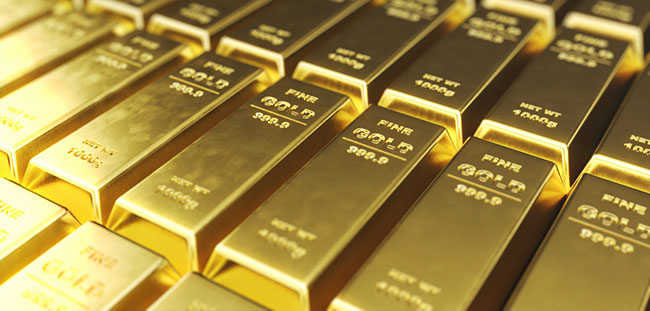
Bullion: precious metals that often come in the forms of bars, ingots or plates; also used when referring to precious metal that is being valuated solely for weight.
Business Strike: a coin that is solely intended for everyday use and circulation—no numismatical significance.

Cast Coins: coins that are produced by pouring melted metals into a mold. This is rarely used nowadays, except by counterfeiters.
Certification: the process through which a coin is authenticated and graded.
Certified Coin: a coin that has been both authenticated and graded, having gone through the certification process.
Circulated: a coin that has been used for transaction purposes, thus gathering natural wear.
Clad Coinage: coins that are made of separate metals or alloys bonded together from their outer to inner layers, such as the American quarter.
Coin Alignment: the means through which coins’ dies—obverse and reverse—are aligned 180 degrees to one another during striking—the common method for American coinage.
Collar: the outer ring of the die chamber, that which holds the planchet in place while a coin is being struck.
Contemporary Counterfeit: a counterfeit coin that was made either at or after the time of the minting of a coin.
Countermark: the over-stamping of a coin that takes place to either change its authority or value, often done by political organizations.

Crown: large, heavy coins of precious metal that are struck for their value and significance. The last struck in U.S. history was the 1978 Eisenhower Dollar.
Debase: during times of high-inflation, this is the means of lowering the silver/gold value of a coin by altering the purity of its precious metal content, all the while keeping its face value.
Denomination: the value of a coin based upon its face value.
Designer: the artist/creator of a specific series of coin.
Device: the pattern used for the face design of a coin.
Die: a metal piece that is used to mold a coin, particularly to cast the planchet.
Die Defect: an imperfection that is caused to a coin by a die that is partially damaged.
Die State: a coin that has a variation from similar coins struck before it, due to an imperfection in the die cast.
Die Variety: variations found between casted coins, from doubling to manmade changes to the die.
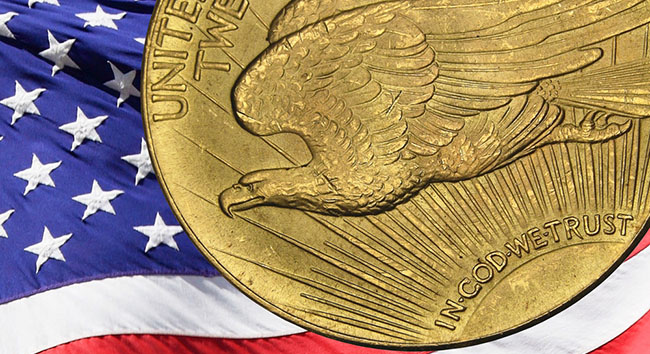
Double Eagle: a $20 U.S. coin struck from 1850 to 1933.
Edge: the rim of a coin which contains special inscriptions or reeds.
Effigy: an image/likeness of a person often featured on the obverse of a coin.
Engraver: the person who inscribes/cuts a design and inscription onto a coin.
Error: a coin that is often damaged during casting and is removed before circulation, or a coin that is released to circulation although it has physical damage and impurities.
Extremely Fine (XF): a coin with the grade of either 40 or 45 on the Sheldon Grading Scale.
Face Value: the value that is inscribed on a coin. For example, the American penny has a 1 cent inscription on it, meaning it has a value of $0.01.

Fair (FR): a coin with a grade of 2 on the Sheldon Grading Scale.
Field: the background of a coin’s face, often untouched with inscriptions or details.
Fine (F): a coin with a grade of either 10 or 15 on the Sheldon Grading Scale.
Fineness: the purity of a piece of metal, often used for precious metal bullion.
Good (G): a coin with a grade of either 4 or 6 on the Sheldon Grading Scale.
Grade: the means through which a coin is valuated for its condition, often based upon its Sheldon Grading Scale numbers.
Hammered: coins that are struck by hand, often using a die and hammer.
High Relief: a coin that has a design that is raised above the field, often making the coin susceptible to damage and an inability for stacking.
Ingot: a bar of pure metal (often gold or silver) that is created by pouring molten precious metal into a mold.
Inscription: the lettering and words on a coin, used for uniqueness and identification.
Intrinsic Value: the current market value of a coin based solely upon its metallic content.
Karat: the unit of measurement used for the purity of gold, usually marked with an uppercase or lowercase K.
Legal Tender: coins that are accepted as legal currency for use in transactions, primarily to pay debts.
Legend: the principal identifying inscription on the face of a coin.
Low Relief: A coin with a design that is not very high above the face.
Medal Alignment: the method of striking coins where the obverse and reverse dies are aligned in the same direction as one another.
Milled Coinage: coinage that has been struck by machine, rather than by hammer or casting.
Milled Edge: the edge of a coin that has grooved lines around its perimeter. Also known as a reeded edge.
Mint Error: a coin that features defects that were produced during the coin’s minting process.
Mint Mark: the letter or symbol featured on a coin that signifies where a coin was minted. U.S. examples include “S” for San Francisco, “W” for West Point and “P” for Philadelphia.

Mint State (MS): an unworn coin that has not seen circulation.
Motto: a phrase that is often featured on a national or governmental coin. Per U.S. example: “In God We Trust.”
Non-Circulating Legal Tender (NCLT): coins that are created solely for collectors, not for circulation, often sold for far more than their legal tender (due to their bullion value).
Obverse: the front (heads) face of a tail; the opposite of the “reverse” face of a coin.
Pattern: coins that are minted and designed to try out new dies and casts of a coin. These are proposed changes to designs, mottos and denomination that are tested but not accepted for future use.
Patina: the film that will be found layered on the face of a coin. This usually appears as either a green or brown film, often found on older coins made of bronze, copper or silver.
Planchet: also known as a blank, this is the flat, prepared disc of metal that is used as the mold for creating coins.

Professional Coin Grading Service (PCGS): the numismatic industry standard for third-party coin evaluation services, started in 1985.
Poor (PO): a coin with the grade of 1 on the Sheldon Grading Scale.
Proof (PF): a coin of high-quality that is prepared in small numbers solely for collectors. These coins usually have a mirror field and frosted appearance.
Proof Set: a set of proof coins that are packaged and sold by the mint as a set.
Reeded Edge: the edge of a coin that has grooved lines around its perimeter. Also known as a milled edge.
Reverse: the back (tails) side of a coin; opposite of the “obverse” side.
Rim: the outer portion of a coin that is raised to protect the designs on its obverse and reverse sides, and makes them more easily stackable.
Round: a round, one ounce precious metal bullion piece.
Sheldon Grading Scale: Dr. William Sheldon’s coin grading scale that was popularized in the 1940s, and still widely used today, in which coins are rated on a scale of 1 to 70.

Spot Price: the current, most available market price of a precious metal in its bullion form.
Uncirculated: a coin that has never been used or featured in common circulation.
Uniface: a coin that has only been casted on one of its faces, either obverse or reverse.
Very Fine (VF): a coin with a grading of either 20, 25, 30 or 35 on the Sheldon Grading Scale.
Very Good (VG): a coin with a grading of either 8 or 10 on the Sheldon Grading Scale.
Year Set: a set of collected coins that are taken from a specific year, where a single coin from each denomination is collected.
If you happen to come across a coin collecting article and find a term whose numismatic meaning you don’t know, feel free to reach out to us. We’re glad to provide you with any numismatic terms meanings and to offer you insight on any numismatic coins you might be interested in.




Thanks so much, I wish I ran into this article 3 years ago!!!!
You mention the PCGS grading service, but I did not see the ANACS nor NGC on here. I tell people grade the coin, not the holder. if you take all three grading companies, ANACS, NGC and PCGS. If you get one type of coin graded, say a 1964 Kennedy Half Dollar, all of them graded MS-65. You will see a DRAMATIC difference in the grading of the coin. It’s a “subjective” process, yes….some one may have “gotten lucky” the night before, or possibly almost ran off the road going in to work, etc; these can adversely affect the true state of mind when it comes to grading. I am sure money and the “political” end game can come into play as well. Don’t ever take some one’s word for something unless they tell you something you already know as a fact, then you can believe them. The collectors ultimate end is a phrase that is truly simple….. “An item is only as valuable as what a collector is willing to pay for it.”