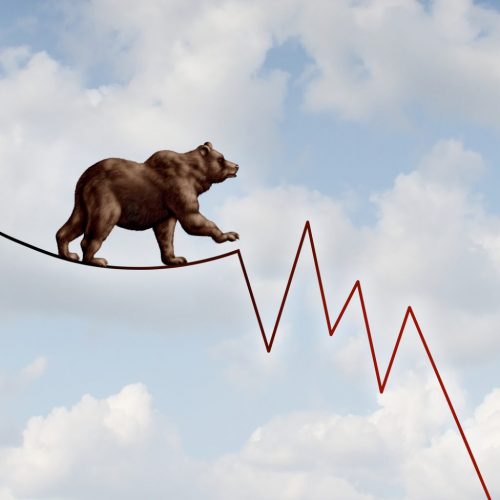
A short lived burst in gold prices during Tuesday’s election madness has since overwhelmingly faded into a now bearish market for the safe haven commodity. Gold has dropped to 5 month lows, without indication prices will return bullish anytime soon.
Reasoning for the market turn is nearly entirely attributed to a increasingly robust dollar. Investors have renewed confidence in the fiscal policies of the new President-Elect and his guarantees to pump money into national infrastructure, leading buyers to feel less pressured to invest entirely in the precious metals commodities.
While interest rates remain likely to increase in the upcoming FOMC meeting, the frantic rush to turn dollars to gold has subsided a bit.
For bullion buyers, the current bear market is a fantastic time to stock up on your shiny, as history shows it will not last, but for the American economy, faith in the future of equity markets as well as commodities brings some much needed hope in recent dark days.




I’ve bought silver from $7 an ounce to $28 an oz. I’ve bought gold from $380 an ounce to $1,350 an ounce. I just roll with it. It’s all part of the game. I hope the dark days didn’t do permanent damage. But I’ll keep stacking and whistling past the graveyard.
Whoa! What a spread! I’ll take some of that $380/oz gold!
The last paragraph of this piece sums it up, buy the dip. In a world of monetary and economic manipulation it has been, is now and will be frustrating for those of us who have identified true money. The bad news is that the paper manipulation will continue for a while, the good news is that this manipulation is pushing PMs lower (as opposed to higher). Again, buy the dip and keep a stiff upper lip! In the end you and yours will be in a much better position having a tangible, valuable asset as opposed to worthless, ink-stained pulp. At least supplement your portfolio with some physical PMs outside the system. If you don’t want to go all-in on PM’s, fine, but start stacking some.
We couldn’t agree more!
Right! Worst case scenario you have a store of value against inflation. Best case you have a rising physical asset. Sounds like a classical win-win situation.
We’re a little biased, but we agree over here at Provident. 😉