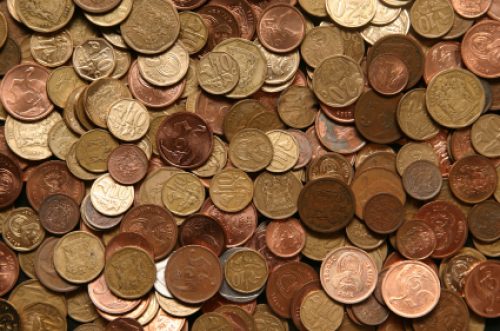
Unless you’re independently wealthy, thinking of money means thinking of mortgage payments and utility bills, filling up the gas tank and buying groceries, even saving for your children’s education. Money can keep you awake at night!
Yet when it comes to the origins of money, we rarely give it a moment’s thought.
One of our associates recently caught an episode of the PBS series Nova, which explored money’s vast, and fascinating history.
It really got us thinking.
So a short while ago, we posted an in-depth summary and additional perspective, in a piece titled The History of Money – A Walk through Time. (You can find the article by clicking on the link, or by visiting our Gold Investment Knowledge Center.)
Defining Money
As we mentioned in the article, money can be defined as any “…identifiable object of value that is generally accepted as payment for goods and services, and repayment of debts, in a market.”
Indeed, over several millennia, money has been defined in countless ways, including gold and silver coins. As the article explains, other lesser-known items also functioned as money: cowrie shells, cattle, leather, timber, food, and much more.
Prior to 10,000 years ago, barter was the primary means of commerce — and arguably the most primitive. While barter has remained only to a certain degree, it has recently experienced a resurgence, thanks to a dismal and floundering economy.
Over the Last 100 Years, Money Has Changed Dramatically
Up until the 1970s, money relied on something of actual value, whether it was cattle, shells, silver or gold.
During the latter part of the twentieth century into the present day, money has been in the form of paper currency, the value of which is regulated by a central bank. Critics of the central bank’s paper-money system contend that it’s led to unbridled monetary expansion, erosion of the currencies’ value, and stagnant wages.
We invite you to learn more about money’s long and varied history. Take a step back through time. You’ll be blown away by the ingenious ways human beings have coordinated day-to-day transactions.




Leave a Reply