Climate activists and protestors joined their voices on September 21 in an unprecedented effort pushing world leaders to take greater action on climate change¹. The demonstrations took place in hundreds of major cities around the globe, from the colorful streets of Rio de Janeiro to the Houses of Parliament in London to the steps of the U.N. Headquarters in New York City. The rallies heralded the United Nations General Assembly, which took place in New York the following week. Among other topics, the U.N. discussed how the world ought to respond to the growing climate change crisis.
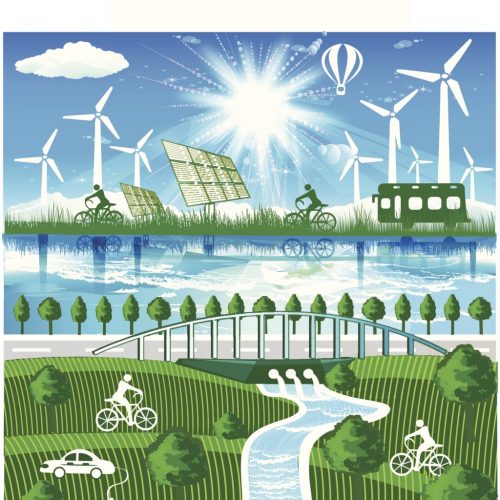
While finding an appropriate solution to this threat has proven to be challenging and elusive thus far, one thing is certain: the general public is becoming increasingly concerned about the state of our environment and the kind of legacy we are leaving for future generations. One of the main targets is the energy sector. Non-renewable sources of energy like coal and oil have been gradually losing support for the last several years, and interest is instead shifting to alternative, renewable energy technologies like wind, solar and geothermal.
Precious Metals – A Part to Play?
While the fact remains that the process of mining rare metals from the Earth has much room for positive change in terms of environmental impact, it is a mistake to discredit demand for precious metals as only an obstacle to overcome. On the contrary, it is evident that these naturally-occurring elements have a crucial part to play in our path to sustainability. In fact, a recent report² from Yale University argues that the scarcity of rare metals, used in everything from electric car batteries to wind turbines to solar cells, is one of the main contributing factors hindering faster growth of renewable energy technologies.
This fact is pushing researchers and climate change activists to search for precious metals in the most unlikely of places—landfills. Despite the high cost and high demand of rare metals for a wide range of industrial applications and investment purposes, very few recycling programs exist to collect this metal from e-waste. It’s estimated that almost 50 million tons of electronic waste are produced each year, from refrigerators to computers to cell phones, and of that, only about 10 percent is recycled. “There’s something like 32 tons of gold in all the world’s cell phones,” one professional e-cycler told Yale researchers. “There’s a huge goldmine in our urban landfills.”
Silver is also experiencing high demand from the solar energy industry, as it is an essential component in the production of photovoltaic cells. (Read our separate blog post on this topic to learn more.) And of course, platinum and palladium are heavily used by the automotive industry in catalytic converters, an emissions control device.
For investors who believe in the further growth of clean energy technologies, claiming a stake in physical precious metals like silver coins are an obvious choice. Since gold, silver and other rare metals are a limited natural resource, as demand rises, so too will prices.
How do you see the climate change movement affecting the markets?
Give us your opinion in the comments below, or via Facebook, Twitter and Google+.




This is the right webpage for everyone who wants to find out about
this topic. You realize so much its almost hard to
argue with you (not that I actually will need to?HaHa).
You definitely put a new spin on a subject that’s been written about for decades.
Wonderful stuff, just excellent!. Here is my creation ::
best cord electric lawn mower Agreenhand